Exception Handling
Exception Handling in Java
The Exception Handling in Java is one of the powerful mechanism to handle the runtime errors so that the normal flow of the application can be maintained.
In this tutorial, we will learn about Java exceptions, it's types, and the difference between checked and unchecked exceptions.
What is Exception in Java?
Dictionary Meaning: Exception is an abnormal condition.
In Java, an exception is an event that disrupts the normal flow of the program. It is an object which is thrown at runtime.
What is Exception Handling?
Exception Handling is a mechanism to handle runtime errors such as ClassNotFoundException, IOException, SQLException, RemoteException, etc.
Advantage of Exception Handling
The core advantage of exception handling is to maintain the normal flow of the application. An exception normally disrupts the normal flow of the application; that is why we need to handle exceptions.
Hierarchy of Java Exception classes
The java.lang.Throwable class is the root class of Java Exception hierarchy inherited by two subclasses: Exception and Error. The hierarchy of Java Exception classes is given below:
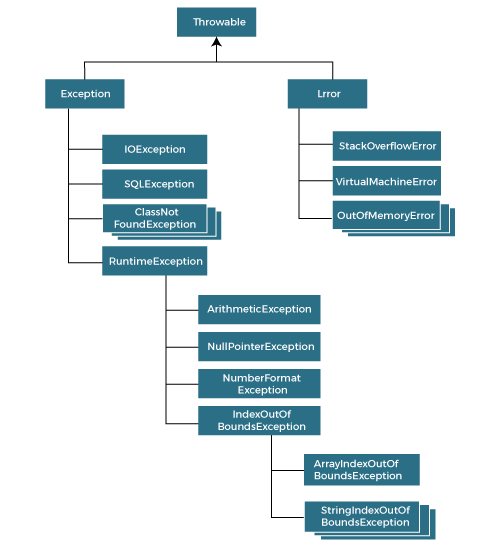
Types of Java Exceptions
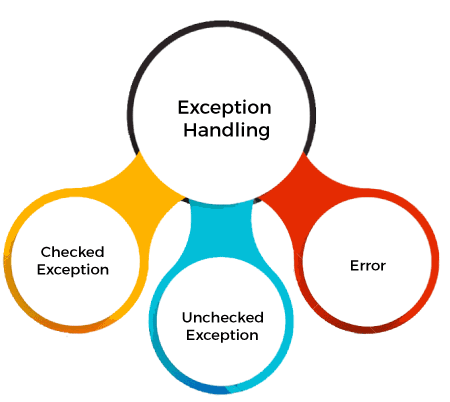
There are mainly two types of exceptions: checked and unchecked. An error is considered as the unchecked exception. However, according to Oracle, there are three types of exceptions namely:
- Checked Exception
- Unchecked Exception
- Error